
A healthy guinea pig diet is built on four core essentials:
- Unlimited fresh hay
- A daily cup of vegetables
- A small amount of high-quality pellets
- Fresh, clean drinking water
Alongside this, guinea pigs benefit from fresh herbs, occasional fruit and safe foraged plants. This guide provides the essential information in one place, with links to detailed pages on every food category.
🥬 The Foundations of a Healthy Guinea Pig Diet
1. Hay (80% of the Diet)
Hay is the most important part of a guinea pig’s diet. It supports digestion, keeps teeth naturally worn down, and provides essential fibre.
Best options:
- Timothy hay (ideal for adults)
- Meadow or orchard hay (good alternatives)
- Alfalfa (only for baby, pregnant, or nursing guinea pigs)
2. Vegetables (1 Cup Per Guinea Pig, Daily)
Vegetables provide hydration, fibre, and—crucially—vitamin C, which guinea pigs cannot produce themselves.
Recommended vegetables include:
Some vegetables (e.g., broccoli, cabbage, cauliflower) can cause gas and should be fed sparingly.
👉 Read the full guide: Best Vegetables for Guinea Pigs
3. Pellets (2 Tablespoons Per Guinea Pig, Daily)
Pellets supplement the diet with stabilised vitamin C and important micronutrients.
Choose pellets that:
- list Timothy hay or grass hay as the first ingredient
- contain no added sugars, seeds, artificial additives or coloured bits
- are specifically formulated for guinea pigs (never rabbit pellets)
Shop for recommended pellet food here >
4. Water (Fresh, Clean, and Always Available)
Provide fresh water daily in a bowl or bottle. Replace and clean regularly to prevent bacterial growth.
👉 Full guide: Guinea Pig Water Guide
🍓 Extras That Enhance Their Diet
These foods add variety, enrichment, and additional nutrients, but should be fed with guidelines in mind.
Herbs (Small Daily Amounts)
Herbs are nutrient-dense and flavourful. Offer one or two herbs per day, mixed with vegetables.
Safe options include:
👉 Full guide: Best Herbs for Guinea Pigs
Fruit (Occasional Treat Only)
Fruit is high in sugar and should be fed in small portions, 3–5 times per week.
Suitable fruits include:
👉 Full guide: Best Fruits for Guinea Pigs
Foraging (Safe Wild Plants & Weeds)
Many wild plants can be fed instead of leafy greens, but proper identification is essential.
👉 Learn more: Foraging Guide for Guinea Pigs
🚫 Foods to Avoid
Some foods are harmful or toxic to guinea pigs and must never be fed.
Common dangerous foods include:
- Onion family (including garlic, chives)
- Avocado
- Rhubarb (all parts)
- Potato
- Mushrooms
- Dairy, meat, bread, cereals
👉 Full list: Unsafe Foods for Guinea Pigs
🥕 Daily Feeding Guidelines
Daily:
- Unlimited hay
- 1 cup of mixed vegetables and/or safely foraged plants with 1-2 herbs
- 2 tablespoons of pellets
- Fresh water
3–5 times per week:
🌿 Guinea Pig Nutrition Basics
Guinea pigs require:
Fibre
Essential for gut movement and digestive health. Provided mainly by hay.
Vitamin C
Guinea pigs cannot make vitamin C. Daily intake is crucial.
Best sources: peppers, leafy greens, herbs.
Calcium & Minerals
Needed for bone and muscle health. Provide a balanced diet rather than low-calcium-only foods.
Vitamin D
Obtained from safe time outdoors in natural light.
🧭 Helpful Resources
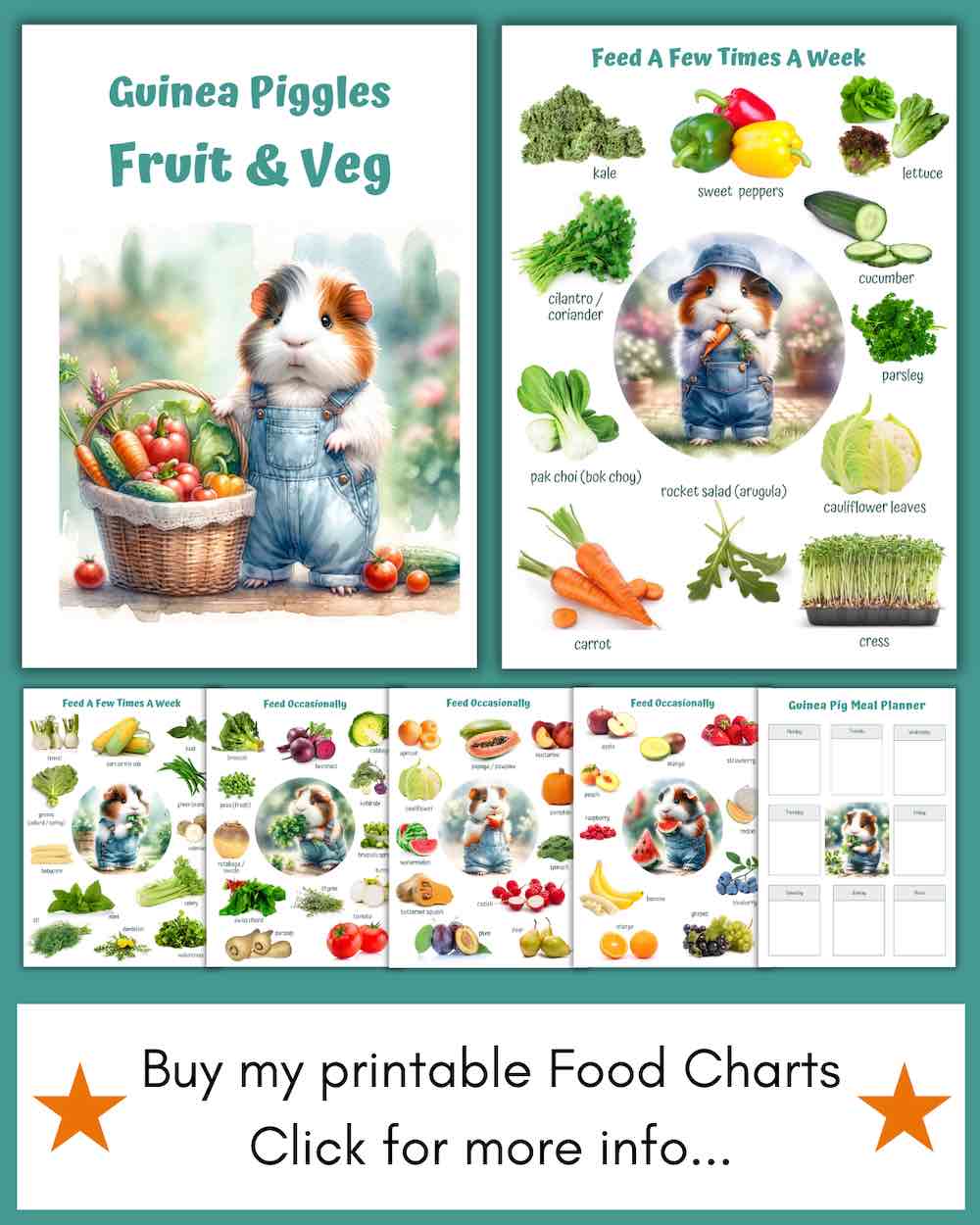
✔ Printable Charts and Meal Planner
A complete food reference pack including:
- Safe food lists
- Feeding frequency guides
- Nutrition tables
- Weekly meal planner
👉 Get the Printable Food Chart Pack
✔ Safe Food Lists
✔ Treat Guide
Healthy treat suggestions that won’t upset their tummy.
👉 Treats for Guinea Pigs
❓ Frequently Asked Questions
How often should guinea pigs eat?
Fresh vegetables once a day; pellets once a day; hay available 24/7.
How do I introduce new foods?
Slowly and in small amounts. Gradual introduction reduces stomach upset.
Can guinea pigs go without food?
No. Guinea pigs must not be left without food—they need constant access to hay.
Should overweight guinea pigs diet?
Never restrict hay or vegetables. Instead, reduce pellets and avoid fruit. Consult a vet for guidance.
Why do guinea pigs eat their own poop?
They eat caecotrophs, a normal behaviour that provides essential nutrients.
🔗 Related Guides
- How to Care for Guinea Pigs — Beginner’s Guide
- Cost of Owning Guinea Pigs
- Recommended Products
- Foraging for Wild Plants
- Foods Guinea Pigs Cannot Eat
Safe Vegetables
Full information on safe vegetables for guinea pigs including feeding guide ›
🫑 Bell Peppers → Read the Bell Pepper guide ›
🥬 Bok Choy → Read the Bok Choy (Pak Choi / Chinese Leaf) guide ›
🥦 Broccoli → Read the Broccoli guide ›
🥕 Carrots → Read the Carrot guide ›
🌱 Celeriac→ Read the Celeriac guide ›
🌱 Celery → Read the Celery guide ›
🥬 Collard Greens → Read the Collard Greens guide ›
🌾 Corn on the Cob → Read the Corn guide ›
🥒 Cucumber → Read the Cucumber guide ›
🌼 Dandelion → Read the Dandelion guide ›
🌿 Fennel → Read the Fennel guide ›
🌿 French Beans (Fine Green Beans) → Read the French Beans guide ›
🥬 Kale → Read the Kale guide ›
🥬 Lettuce → Read the Lettuce guide ›
🌿 Spinach → Read the Spinach guide ›
🍅 Tomato→ Read the Tomato guide ›
🍃 Watercress→ Read the Watercress guide ›
Safe Herbs
Full information on safe herbs for guinea pigs and feeding guide ›
🌿 Basil → Read the Basil guide ›
🌱 Coriander (Cilantro) → Read the Coriander guide ›
🌿 Dill → Read the Dill guide ›
🌱 Mint → Read the Mint guide ›
🌿 Parsley → Read the Parsley guide ›
Safe Fruits
Full information on safe fruit for guinea pigs and feeding guide ›
🍎 Apple →Read the Apple guide ›
🍌 Banana →Read the Banana guide ›
🫐 Blueberries →Read the Blueberries guide ›
🍇 Grapes →Read the Grape guide ›
🍈 Melon →Read the Melon guide ›
🍓 Strawberries →Read the Strawberry guide ›
🍉 Watermelon →Read the Watermelon guide ›
